

Guide to Trade Show Booth Signage Layout and Design
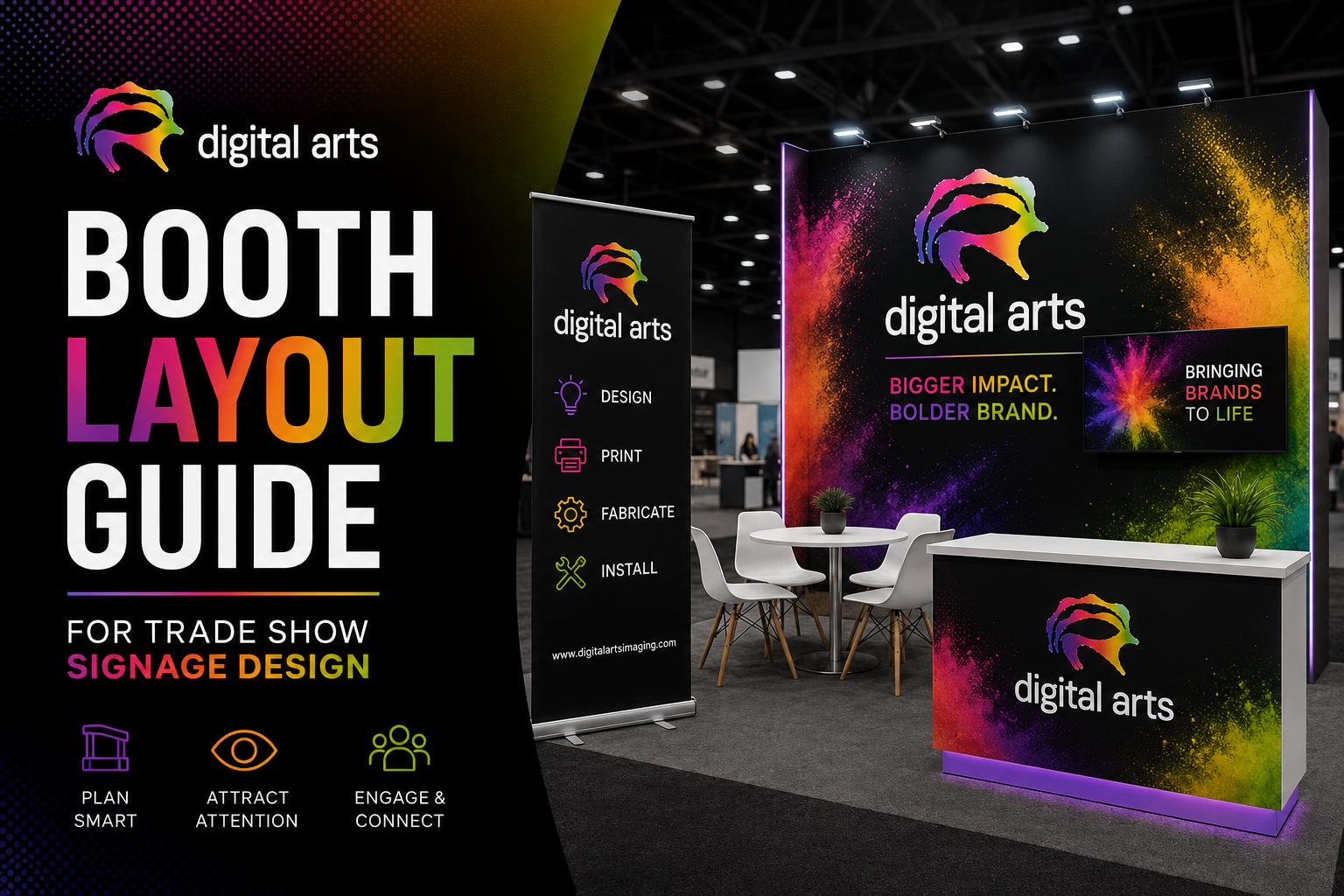
Trade shows are highly competitive environments. Every exhibitor is fighting for visibility, attention, and conversations with potential customers. In crowded event halls filled with lights, banners, and displays, booth signage often becomes the deciding factor between attracting visitors or being ignored.
A strong booth layout is not just about aesthetics. It directly affects attendee movement, brand perception, engagement, and lead generation. Poor signage placement can create confusion and block visibility, while a well-structured booth layout helps guide visitors naturally through the space.
For exhibitors investing time and money into events, strategic signage design is essential for maximizing return on investment.
Why Booth Layout Matters at Trade Shows
Trade show attendees make decisions quickly. Many visitors scan booths while walking through aisles and decide within seconds whether a booth is worth approaching.
A well-planned booth layout helps exhibitors:
- Improve visibility from a distance
- Communicate services quickly
- Create smoother traffic flow
- Encourage visitors to stop
- Increase engagement opportunities
- Support lead generation efforts
Trade shows are designed to allow businesses within an industry to showcase products and services while connecting directly with prospects and partners. In these fast-paced environments, booth organization becomes a competitive advantage.
Start With Clear Visibility
The first goal of booth signage is attracting attention from across the event floor.
Large-format graphics should immediately communicate:
- What the company does
- Who the company helps
- Why visitors should stop
This is where high-level signage placement becomes critical.
Important Visibility Areas Include:
- Overhead hanging signs
- Backwall graphics
- Tall banner stands
- Side-facing signage visible from aisles
The company name and primary message should always be readable from a distance. Avoid overcrowding signs with too much information.
Short, bold messaging performs better than paragraphs of text.
For example:
- “Custom Event Graphics”
- “Fast Turnaround Printing”
- “Interactive Product Demos”
- “Trade Show Displays That Get Attention”
Create a Natural Traffic Flow
An effective booth layout guides attendees naturally through the booth without confusion.
One of the most common mistakes exhibitors make is placing too many displays or furniture pieces near the entrance, creating bottlenecks that discourage visitors from entering.
Instead, the layout should feel open and inviting.
Good Booth Flow Often Includes:
- Attention-grabbing front signage
- Open entry points
- Product or service displays in the middle
- Meeting or demo areas toward the back
- Clear call-to-action signage throughout the booth
Visitors should never feel trapped or unsure where to go.
Use Signage to Direct Attention
Booth signage should function like silent salespeople.
Strategically placed signs can guide attendees toward:
- Product demonstrations
- Promotional offers
- QR codes
- Meeting spaces
- Interactive displays
- Lead capture stations
Directional signage is especially important in larger booth layouts where visitors may not immediately understand where to focus.
This is similar to the principles used in Wayfinding, where visual cues help people navigate physical environments more efficiently.
Prioritize Readability
Trade show environments are visually noisy. Attendees are surrounded by competing graphics, lights, and motion.
If signage is difficult to read, it will likely be ignored.
Best Practices for Readability:
- Use large fonts
- Maintain strong color contrast
- Limit text quantity
- Use concise headlines
- Avoid overly decorative fonts
- Keep important messaging at eye level
A common recommendation is the “10-foot rule.” If attendees cannot understand the message from approximately 10 feet away, the signage may be too complicated.
Match Signage With Brand Identity
Consistency across signage helps build credibility and recognition.
The booth layout should reflect the company’s:
- Brand colors
- Typography
- Messaging tone
- Photography style
- Logo placement
When all booth elements feel cohesive, the overall presentation appears more professional and memorable.
Inconsistent branding can make even expensive booths look disorganized.
Design Around Visitor Behavior
Trade show attendees rarely stop immediately. Most people scan booths while walking.
Because of this, exhibitors should think about how signage appears from multiple angles.
Important Questions to Consider:
- Can attendees understand the booth while walking past?
- Is the main message visible from side aisles?
- Are key graphics blocked by furniture or people?
- Is there enough open space for conversations?
Designing with movement in mind improves engagement opportunities.
Integrate Interactive Elements
Modern trade show booths increasingly incorporate interactive experiences.
This can include:
- Touchscreens
- QR codes
- Digital displays
- Product demos
- Live presentations
Signage should support these experiences by clearly directing attendees toward participation.
For example:
- “Scan to See Portfolio”
- “Watch Live Demo”
- “Enter Giveaway Here”
- “Book a Consultation”
Interactive signage can help increase booth dwell time and improve lead capture rates.
Lighting Plays a Major Role
Even excellent booth signage can lose impact with poor lighting.
Strategic lighting helps:
- Highlight important graphics
- Improve readability
- Create atmosphere
- Draw attention from a distance
Backlit displays, spotlights, and illuminated signage are commonly used to increase booth visibility in crowded exhibition halls.
However, balance is important. Overly bright or distracting lighting can overwhelm visitors.
Don’t Ignore Lead Generation Placement
Many exhibitors focus heavily on booth appearance but forget the most important goal: generating leads.
Lead capture areas should feel natural within the booth layout.
Popular options include:
- Tablet sign-up stations
- QR code displays
- Consultation counters
- Giveaway registration tables
These areas should be easy to access without interrupting booth traffic flow.
Clear signage should explain what attendees receive in exchange for their information.
Why Professional Booth Graphics Matter
Professional booth graphics can dramatically influence how attendees perceive a business.
Low-quality printing, blurry images, or poorly aligned signage can weaken credibility, even if the company offers excellent products or services.
This is why many exhibitors work with experienced print and event graphics providers.
Partner With Digital Arts Imaging
Digital Arts Imaging helps businesses create professional trade show graphics, event signage, and branded display materials designed to improve visibility and engagement at live events.
From large-format printing and banner stands to custom booth graphics and event displays, their team helps exhibitors create polished, high-impact presentations that stand out in competitive environments.
Businesses preparing for upcoming trade shows can also contact Digital Arts Imaging Contact Page to discuss booth signage solutions tailored to their event goals.
Final Thoughts
A successful trade show booth is more than attractive graphics. It requires strategic planning, thoughtful booth layout decisions, and signage designed around attendee behavior.
When booth signage is positioned correctly, easy to read, visually cohesive, and aligned with visitor flow, exhibitors create stronger engagement opportunities and improve lead generation potential.
In crowded trade show environments, structure and clarity often outperform complexity.
The businesses that attract the most attention are usually the ones that make it easiest for attendees to understand who they are, what they offer, and why visitors should stop.
Frequently Asked Questions
What is the most important part of a trade show booth layout?
Visibility and traffic flow are two of the most important elements. Attendees should immediately understand the booth’s purpose and feel comfortable entering the space.
How much text should booth signage include?
Booth signage should prioritize concise messaging. Short headlines and clear visuals usually perform better than large blocks of text.
What type of signage works best for trade shows?
Popular options include backwall displays, retractable banners, hanging signs, floor graphics, and illuminated displays.
Why is booth layout important for lead generation?
A well-organized booth layout guides visitors naturally through the space and helps create smoother opportunities for conversations, demos, and lead capture.
Should businesses invest in professional trade show graphics?
Yes. Professional signage improves credibility, readability, and overall presentation quality, which can significantly affect attendee engagement.