

Reuse Event Graphics: 6 Easy Ways to Save Money
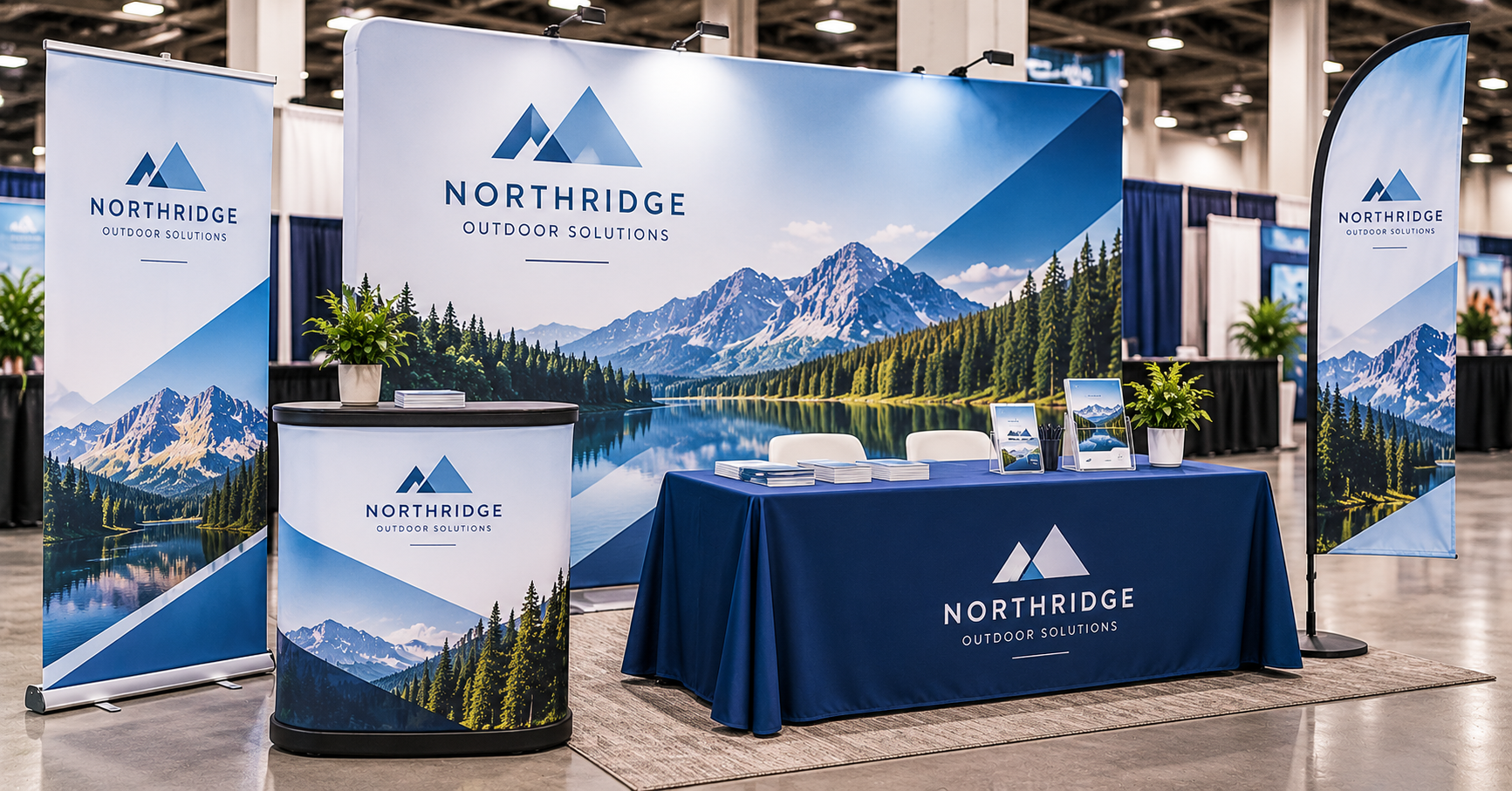
Want to reuse event graphics without showing up with outdated messaging or a display that no longer fits? Start by reviewing what you already own before ordering anything new.
After a trade show, conference, street fair, or company event, it’s easy to pack everything away and forget about it until the next setup. But those banners, backdrops, signs, and display stands may still have plenty of useful life.
The key is knowing which pieces are ready for another event, which need updated graphics, and which should be replaced.
Here are six practical ways to reuse event graphics while keeping your presentation current, coordinated, and professional.
1. Review the Message Before You Reuse Event Graphics
A graphic’s condition is only part of the decision. Its message needs to work for the next audience, too.
A company logo backdrop, branded table cover, or banner featuring your core services may be suitable for several events. Graphics with changing information require a closer look.
Check every piece for:
- Event names, dates, and locations.
- Sponsor logos and partner information.
- Special offers, pricing, or promotions.
- Speaker names and session schedules.
- Outdated products, services, or contact details.
- QR codes that lead to an old campaign or registration page.
Test each QR code on a phone and review the destination page. Even a working link can send visitors to information that is no longer relevant.
Also consider who will see the display. A message created for potential customers may need updating before an employee event or industry conference.
Keep a graphic when its message still supports the next event. Refresh it when the information or audience has changed.
2. Confirm the Fit for Your Next Venue
Before you reuse event graphics, compare the new venue with the space where the pieces were last used.
A large stage backdrop may overwhelm a small booth, indoor banners may not suit outdoor use, and directional signs may need updating for a new venue.
Review these details before committing to your existing setup:
- Available space: Confirm booth, stage, wall, and floor dimensions.
- Viewing distance: Check whether the text will be readable from the expected approach.
- Placement: Consider entrances, sightlines, and neighboring displays.
- Installation: Confirm how each piece will be mounted or supported.
- Environment: Identify indoor or outdoor conditions.
- Venue requirements: Review restrictions on mounting, materials, and display height.
Check measurements against the actual graphic and its assembled hardware. The printed panel’s dimensions alone may not reflect the full space a stand or frame needs.
For a broader planning checklist, read our event graphics and displays planning guide.
3. Inspect Both the Printed Graphics and the Hardware
Unpack your materials early enough to leave time for repairs or replacements.
Look for faded color, tears, worn edges, stains, peeling areas, and creases that affect the appearance of the graphic. Then inspect the hardware for missing parts, bent components, loose connections, and mechanisms that do not operate smoothly.
Assemble the display before declaring it ready for another event.
A stand can look fine inside its case but reveal a problem once it is extended or connected. Check that the finished display sits correctly and that all required components are present.
If you plan to reuse event graphics outdoors, ask your print provider whether the materials and support system are appropriate for the expected conditions. Suitability should be checked for each display.
Where a system accepts replacement graphics, you may be able to keep the frame or stand and replace only the printed piece. Confirm the exact model, dimensions, and attachment method before ordering.
4. Replace Only the Pieces That Need Updating
A refreshed event setup does not always require an entirely new set of materials.
You might retain a company backdrop and table cover while ordering new signs for a product launch. Or keep a compatible display frame and replace its graphic to reflect your current services.
Review the whole setup together. Check for:
- Consistent logos and brand colors.
- Matching fonts and visual styles.
- Accurate descriptions and contact information.
- Clear messages that complement one another.
When you reuse event graphics alongside new pieces, an older logo or different design style can make the display feel disconnected.
Decide whether each piece should be kept, refreshed, or replaced based on its condition, relevance, and compatibility. Avoid covering outdated information with an improvised patch unless your print provider confirms that the result will look appropriate and perform as intended.
5. Design New Event Graphics for Repeated Use
Planning for reuse before production gives you more options later.
Keep your main branded pieces focused on information that is likely to stay relevant. Put details that change from event to event on separate signs or replaceable panels.
For example, an annual conference could use a company-branded backdrop alongside a separate welcome sign featuring that year’s date and theme. A business attending several trade shows could keep its main display consistent while changing smaller signs to highlight products for each audience.
To reuse event graphics more easily, ask:
- Does the event date need to appear on the largest display?
- Could sponsor recognition go on a separate sign?
- Can the printed panel be replaced without replacing the hardware?
- Will the wording still make sense at another event?
- Can this piece fit more than one planned venue?
Reuse also supports a broader effort to reduce waste. The EPA’s waste reduction guidance includes reusing materials as part of reducing, reusing, and recycling. US EPA
The practical goal is to create a useful set of branded materials that can adapt as your event calendar changes.
6. Store and Track Your Displays Between Events
Good storage starts with the instructions for the specific material and display system.
Some graphics are designed to roll, others to fold, and others to remain flat. Follow the supplier’s packing and cleaning guidance, use suitable protective cases, and make sure pieces are clean and dry before storage.
Label each case with its contents and any matching hardware. Keep a simple inventory that records:
- A photo of the assembled display.
- Graphic and hardware dimensions.
- The message or artwork version.
- The storage location.
- Missing parts or damage.
- Repairs or updates needed before the next event.
Assign someone to review the inventory when materials return from an event. Recording a problem immediately is easier than rediscovering it during the next setup.
A clear inventory helps your team reuse event graphics confidently and order only what is needed.
Frequently Asked Questions
Can you reuse event graphics from year to year?
Yes, when the graphics remain in good condition, fit the venue, and contain accurate information. Review dates, sponsors, offers, and branding before each use. There is no single lifespan that applies to every material or display.
Can you replace a banner graphic and keep the stand?
Some banner systems allow graphic replacement, while others may make replacement impractical. Confirm the stand model, condition, graphic dimensions, and attachment method with your print provider first.
Should reusable event displays include dates?
Keep dates on separate pieces when you expect the main display to serve several events. Event-specific signs can carry the date, venue, theme, or schedule while the larger branded pieces remain reusable.
Get More Value from Your Next Event Setup
You can reuse event graphics effectively when the message, condition, materials, and venue fit all work together.
Reviewing those details before placing an order helps you focus your budget on what needs attention. It also gives your team time to address missing parts, outdated information, and installation questions.
Digital Arts Imaging provides event printing and graphics to help businesses create a coordinated presentation for their next gathering.
Planning your next event? Contact Digital Arts Imaging to discuss what you have, what’s changing, and what you’ll need.