
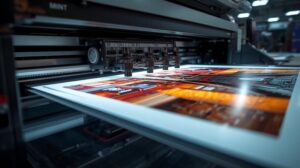
Digital printing is evolving faster than ever. As customer expectations rise and production demands become more complex, businesses are turning to advanced digital solutions to improve quality, efficiency, and flexibility. From automation and artificial intelligence to sustainability and on-demand production, today’s innovations are reshaping how print is produced, managed, and delivered.
This guide explores the most important digital printing technology trends shaping the future of print. Whether you operate a commercial print shop, manage procurement, or are evaluating new equipment investments, understanding these trends can help you make smarter, more cost-effective decisions.
Automation and Smart Print Workflows
One of the most impactful digital printing trends is the growing adoption of automation across print workflows. Modern automated systems streamline processes such as job setup, file pre-flighting, queue management, and scheduling, helping reduce manual steps, minimize errors, and speed up production timelines. With fewer touchpoints and more consistent output across print runs, print teams can shift their focus away from repetitive tasks and toward quality control, customer service, and higher-value work. For commercial printers, automation helps lower labor costs and improve scalability, while businesses handling printing in-house benefit from reduced downtime and greater consistency especially when managing high volumes or tight deadlines.
AI in Digital Printing and Data-Driven Production
Artificial intelligence is no longer limited to software platforms; it is now embedded directly into modern printing technology. AI in digital printing is transforming how machines operate by monitoring print quality in real time, predicting maintenance needs before breakdowns occur, automatically adjusting color accuracy, and supporting variable data and personalized printing. These capabilities help reduce waste, prevent costly disruptions, and improve overall production efficiency. From a business perspective, AI enables print operations to lower operating costs while improving reliability, allowing teams to plan proactively rather than react to problems after they arise and consistently deliver high-quality output with fewer interruptions.
Sustainable Printing Technology Becomes a Priority
Sustainability has become a priority in digital printing as businesses increasingly consider environmental impact when choosing print solutions. Sustainable printing technology is driving innovation through energy-efficient digital presses, reduced ink and material waste, eco-friendly inks, and recyclable substrates, along with short-run and on-demand printing that prevents overproduction. Digital printing inherently supports sustainability by eliminating plates, reducing setup waste, and allowing precise production volumes. Beyond environmental responsibility, sustainable printing helps lower long-term costs and strengthen brand reputation, and as more organizations require environmentally conscious vendors, sustainability has become a clear competitive advantage for print providers.
On-Demand and Personalized Digital Printing Technology Trends
The shift toward on-demand digital printing continues to accelerate as businesses seek flexibility and customization without excess inventory.
Benefits of on-demand printing
- Print only what is needed, when it’s needed
- Reduce storage and waste
- Enable short runs and rapid updates
- Support personalized and variable data printing
This approach is especially valuable for marketing materials, packaging, and transactional documents where content changes frequently.
Personalization at scale
Advancements in commercial digital printing technology allow personalization without slowing production. From customized direct mail to targeted promotional materials, personalization improves engagement while maintaining efficiency.
High-Speed Inkjet and Advanced Printing Solutions
High-speed inkjet technology is another key force shaping the future of digital printing, as it continues to narrow the gap between traditional offset printing and digital efficiency. These advanced printing solutions deliver faster production speeds, improved color accuracy and resolution, enhanced display quality, compatibility with a wider range of substrates, and a lower cost per page for high-volume jobs. As a result, high-speed inkjet enables digital printing to compete effectively with traditional methods for larger print runs while still offering the flexibility and quick turnaround that digital printing is known for. Commercial printers managing high volumes and businesses producing frequent, time-sensitive materials stand to benefit the most from these advancements.
How Businesses Should Approach Digital Printing Technology Trends
Adopting new technology doesn’t mean replacing everything at once. Instead, businesses should take a strategic, phased approach when responding to digital printing technology trends.
Practical considerations
- Assess current production needs and growth plans
- Prioritize technologies that reduce waste and downtime
- Invest in scalable solutions that support future expansion
- Train teams to maximize the value of new systems
The right technology investment improves efficiency today while protecting long-term competitiveness.
Conclusion: Preparing for the Future of Digital Printing
The latest digital printing technology trends reflect a clear shift toward smarter, more efficient, and more sustainable print production. Automation, AI integration, eco-friendly solutions, on-demand printing, and high-speed inkjet advancements are no longer emerging ideas; they are becoming industry standards.
Businesses that understand these trends and adopt them strategically will benefit from improved print quality, lower operating costs, and greater flexibility. As digital printing continues to evolve, informed decision-making is the key to staying competitive in a changing market.
FAQ: Digital Printing Technology Trends
What are the latest digital printing technology trends?
The latest trends include automation, AI-driven printing, sustainable printing technology, high-speed inkjet advancements, and on-demand digital printing.
How are digital printing technology trends evolving?
Digital printing is becoming faster, more automated, more sustainable, and more capable of handling personalization and short-run production at scale.
What role does AI play in digital printing?
AI improves quality control, predictive maintenance, workflow efficiency, and personalization while reducing waste and downtime.
Is digital printing replacing traditional printing?
Digital printing is not fully replacing traditional printing, but it is increasingly preferred for flexibility, speed, personalization, and cost efficiency especially for short to medium runs.
For more information, check out our other blogs.